
 BECOME A MEMBER
TREE-BASED FARMING SYSTEMS FOR BIODIVERSITY CONSERVATION
Read Full ArticleKeywords
- Agroforestry
- Biodiversity Conservation
- Ecosystem Services
- Tree-Based Farming
- Sustainable Agriculture
Magazine: April-June 2026
Page: 49 - 54
Volume: 6
Issue: 2
Issue Date: 10 July 2026
Abstract
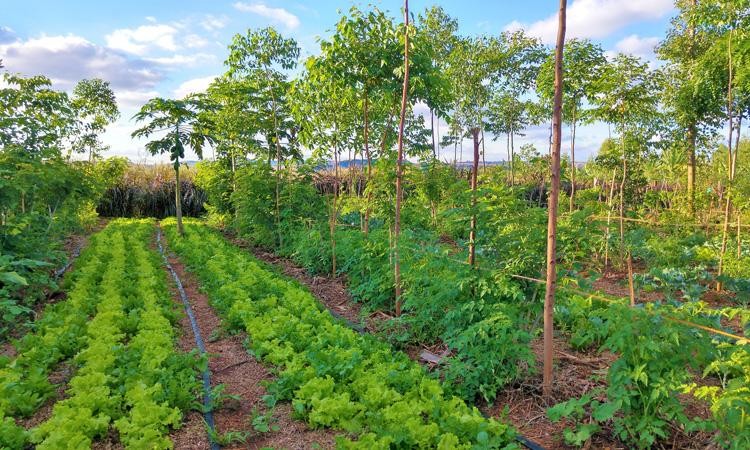
Tree-based farming systems, commonly known as agroforestry, integrate trees with crops and livestock to enhance productivity and environmental sustainability. These systems support biodiversity by providing habitats for wildlife, conserving soil organisms, promoting pollinators, and improving ecological connectivity. Unlike monocultures, agroforestry creates diverse ecosystems that enhance carbon sequestration, nutrient cycling, water conservation, and climate regulation. Traditional agroforestry practices have long preserved genetic resources and ecological balance. This article discusses the role of tree-based farming systems in biodiversity conservation, major agroforestry models, their ecological functions, and future prospects for sustainable land management..