
 BECOME A MEMBER
TOXIC FOOT PRINT OF CHEMICALS: IMPACTS ON SOIL QUALITY, WATER RESOURCES, AND BIOTIC COMMUNITIES
Read Full ArticleKeywords
- Green Revolution
- Synthetic Fertilizers
- Pesticides
- Herbicides
- Toxicity
Magazine: October - December 2025
Page: 35 - 43
Volume: 5
Issue: 4
Issue Date: 10 December 2025
Abstract
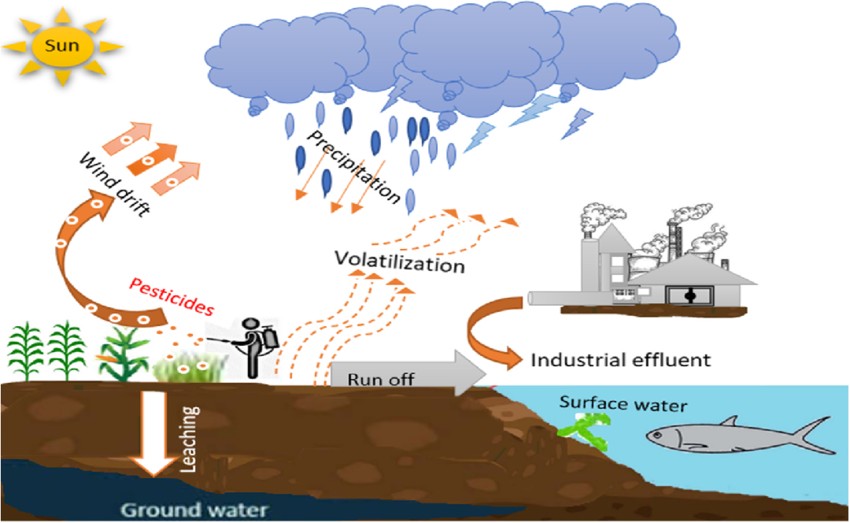
The green revolution in India, launched in the mid-1960s, represented a pivotal shift in agricultural production by introducing high-yielding, input-responsive crop varieties supported by expanded irrigation and intensive nutrient management. This transformation helped convert India from a food-deficient nation into a major food producer. However, the productivity gains were largely dependent on extensive use of synthetic fertilizers, pesticides, and herbicides. Over time, their indiscriminate and continuous application has led to ecological challenges, including pest resistance, secondary pest resurgence, chemical residues, non-target toxicity, and declining soil health. Consequently, systematic risk assessment is essential for sustaining agricultural productivity and environmental safety.